Sleeve Length Does More Damage Than Jacket Length on a Petite Frame
Quick Answer: A sleeve that runs past the wrist bone shortens the visible hand and arm, which the eye reads as a smaller overall frame. On a petite build the standard sleeve is typically one to two inches long, and correcting it changes the proportion more visibly than shortening the jacket body, because sleeves move and hems do not.
You spent money hemming the blazer. It still looks slightly borrowed. Look at where the cuff sits relative to your wrist bone, because that is almost always the actual problem.

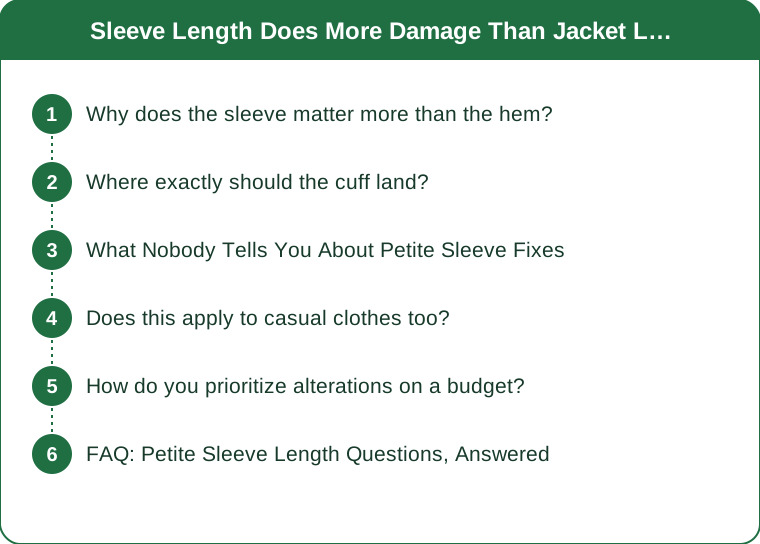
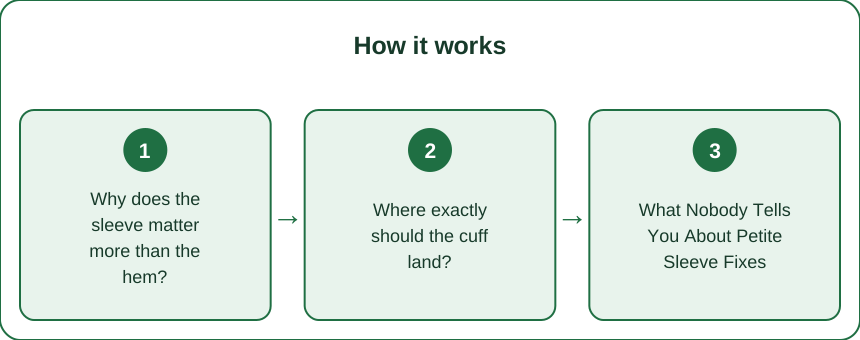
Why does the sleeve matter more than the hem?
Because of motion and because of the hand.
A jacket hem sits still. You see it in a mirror, standing, front-on. A sleeve moves constantly, and every gesture puts the cuff and your hand in the viewer’s line of sight. Fit errors that move are noticed far more than fit errors that stay put.
The second reason is that the hand functions as a proportional reference. When the cuff covers part of the hand, the visible hand gets smaller, and the eye calibrates the rest of the body against it. A frame with small-looking hands reads as smaller overall, which is the exact opposite of what most petite styling is trying to achieve.
There is also a signaling effect. A too-long sleeve is the single most reliable visual marker of a garment that was not made for the wearer. Correct hem, wrong sleeve reads as borrowed. Correct sleeve, slightly long hem reads as a style choice.
Where exactly should the cuff land?
For a jacket or blazer: at the wrist bone, or a quarter inch above it. You should be able to see the whole hand and the joint.
For a shirt worn under a jacket: about half an inch past the jacket cuff, which means the shirt sleeve lands just past the wrist bone.
For a knit or sweater: at the wrist bone if it is structured, and at the base of the thumb only if the oversized look is deliberate and the rest of the outfit supports it.
For a coat: half an inch past the wrist bone is acceptable, because coats are worn over layers and a slightly longer sleeve reads as intentional outerwear length.
The test that takes two seconds: stand naturally with arms at your sides and look down. If you cannot see your wrist bone, the sleeve is long. If you have to shake your arm to free your hand, it is significantly long.
Most petite frames need one to one and a half inches removed from a standard sleeve, and the difference between those two measurements is visible.
What Nobody Tells You About Petite Sleeve Fixes
Buttoned cuffs are cheaper to shorten than they look, but only from the shoulder on a structured jacket. Functional buttonholes on a blazer mean the alteration has to happen at the sleeve head, which costs more and is worth it on a garment you will wear for years.
Three-quarter sleeves are the free version of this fix. They land above the wrist by design, expose the whole hand and part of the forearm, and require no tailoring. This is why they have been a petite standby for decades, and it is a proportion effect rather than a trend.
Pushing sleeves up is not a neutral solution. It creates a bulk ring at the widest part of the forearm, which adds visual width exactly where you did not want it. It works with light fabric and fails with anything structured.
Sleeve width matters almost as much as length. A narrow cuff on a short sleeve looks deliberate. A wide cuff on a short sleeve looks like a shrunken garment. When shortening, ask the tailor about tapering the last few inches.
And the one that changes the shopping list: buy for the shoulder, alter the sleeve. A shoulder seam that sits wrong cannot be fixed affordably. A sleeve almost always can. Most petite shoppers are doing the reverse and buying the sleeve length that fits, which puts the shoulder seam halfway down the arm.

Does this apply to casual clothes too?
Yes, and arguably more, because casual clothing is where people stop paying attention.
A long-sleeve tee with cuffs at the knuckles is extremely common on petite frames and drags the whole look down without anyone identifying why. The garment is soft and comfortable, so it does not feel wrong the way a stiff jacket does.
The same applies to hoodies and sweatshirts, where the standard sleeve plus a ribbed cuff can add three inches past the wrist. The ribbed cuff is the giveaway, because it bunches rather than draping.
Practical fixes that do not require tailoring: choose styles with a shorter body-to-sleeve ratio, look for cropped or boxy cuts where the sleeve was drafted proportionally, and treat the bracelet sleeve as a category rather than an accident.
For activewear specifically, check the thumbhole placement. A thumbhole drafted for a longer arm sits so far past the wrist that using it bunches fabric at the palm, which is both uncomfortable and visually messy.
How do you prioritize alterations on a budget?
In this order, for a petite frame.
1. Sleeve length. Highest visual return per dollar, and it applies to almost every garment with a sleeve.
2. Hem length on trousers. Second, because a break at the wrong point on the shoe shortens the leg line and is equally visible in motion.
3. Jacket body length. Third, and only if the hem is landing at a genuinely awkward point such as the widest part of the hip.
4. Waist suppression. Fourth, and often not needed if the first three are right.
The common mistake is spending the alteration budget on the body of a jacket while leaving the sleeves. The body change is measurable on a hanger. The sleeve change is what people notice on you.
One practical note: bring the shoes and the layers you will actually wear to the fitting. A sleeve pinned over a bare arm will be short over a shirt cuff, and a trouser hemmed over sneakers will be wrong with anything else.
FAQ: Petite Sleeve Length Questions, Answered
Can all sleeves be shortened?
Most can. The exceptions are sleeves with detail near the cuff, such as pleats, zips, or embroidery, and heavily structured jackets with functional buttonholes, where the work moves to the shoulder and costs more. Ask before buying if the garment is expensive.
Is a petite-labeled garment automatically right?
No. Petite sizing shortens the sleeve and body but brands differ substantially in how much, and some only adjust the body. Check the wrist bone regardless of the label.
What if my arms are proportionally long for my height?
Then buy regular sleeves and alter the body instead, which is the reverse of standard advice and the correct call for your frame. Petite sizing is an average, not a diagnosis. Measure your own arm from shoulder point to wrist bone once and shop against that number.
TL;DR:
- Sleeves move constantly, so sleeve errors are seen far more than hem errors
- The cuff belongs at or just above the wrist bone, with the whole hand visible
- Buy for the shoulder and alter the sleeve, never the reverse
- Sleeve length is the highest-return alteration on a petite frame, ahead of trouser hem and jacket body
Look down at your arms right now. If you cannot see your wrist bones, you have found the fix that costs about twenty dollars and changes every photograph you are in.
See It in Motion
Seen here: Bootcut Capri Yoga Pants with Pockets — shop similar styles on bubblelime.com
Keep Reading
This article is for general informational and styling purposes only. Fit, sizing, and product availability may vary.