Why Petite Trousers Fit at the Waist and Fail at the Hip
Quick Answer: Petite grading shortens vertical measurements — rise, inseam, torso — but usually keeps the same hip-to-waist ratio and the same distance from waistband to the fullest part of the hip. On a shorter frame that fullest point sits higher than the pattern assumes, so the trouser pulls across the hip while fitting the waist perfectly.
The waistband is exactly right. The hip is straining, or there is a diagonal drag line from the hip to the crotch, or the pockets flare open. You size up and now the waist gapes by two inches. This is not your body being difficult. It is a grading shortcut.
What does petite grading actually change?
Less than the label implies.
Most petite lines take a standard block and shorten it in a few predictable places: inseam, rise, torso length, and sleeve. Sometimes they reduce shoulder width slightly. The circumference measurements — waist, hip, thigh — usually stay the same as the regular size, because petite refers to height rather than to width.
What almost never gets adjusted is the vertical position of the hip curve within the pattern. The distance from the waistband seam down to the widest point of the hip is calculated for a taller torso.
On a shorter frame, your actual fullest point sits perhaps an inch or an inch and a half higher than where the pattern puts its maximum width. So at the height where you are widest, the trouser is still narrowing. That is the entire mechanism, and it produces every symptom on the list.
How do you recognize which problem you have?
The drag lines tell you. Fabric pulls toward the place where it is too tight, and pools where there is excess.
- Diagonal lines from the hip toward the crotch: the hip curve is sitting too low for you. Classic petite mismatch.
- Horizontal pull straight across the widest point: genuinely too small in the hip, not a grading issue.
- Fabric pooling under the seat with a fine fit elsewhere: the rise is still too long even in petite, common if you are short in the torso specifically rather than in the leg.
- Pockets gaping open: hip circumference too small at that height, the most reliable single diagnostic for the petite hip problem.
- Waistband riding up at the back: the back rise is too short relative to your seat, which happens when petite grading takes the length out of the wrong place.
Diagnose in a mirror while standing normally, not while posing. Then walk five steps and look again — many petite fit problems only appear in motion.
5 Mistakes Everyone Makes Shopping Petite Trousers
-
Sizing up for the hip. It solves one problem and creates two: a gaping waist and a rise that now sits too low. Buy for the hip only if the waist can be taken in, which is a cheap alteration.
-
Assuming all petite lines grade the same way. Some brands shorten only the inseam and call it petite. Check whether the rise measurement differs from the regular size — if it does not, it is a hemming job with a different label.
-
Ignoring the pocket test in the fitting room. Pockets that lie flat standing but gape when you sit will gape all day.
-
Buying stiff fabrics. A trouser with 2 to 3% elastane, or a fabric with natural give like a soft wool crepe, absorbs a grading mismatch that a rigid cotton twill will display permanently.
-
Not budgeting for alterations. The third mistake catches people out, but this is the expensive one. A waist take-in and a hem cost less than the four pairs you will buy trying to avoid them.

What alterations actually solve it?
The good news is that this is one of the most fixable fit problems, because the excess is in an easy place.
- Take in the waist at the center back seam. Cheapest and most common alteration. Fixes the size-up strategy completely, usually for a modest cost, and takes a good tailor under an hour.
- Raise the waistband. More involved, but it moves the whole hip curve up relative to your body, which addresses the actual mismatch rather than compensating for it. Worth doing on trousers you love.
- Shorten the back rise only. Solves the riding-up-at-the-back problem specifically, and is invisible when done well.
- Let out the hip seams if there is seam allowance, which there often is in better-made trousers.
A useful shopping habit: check the seam allowance before you buy. Turn the trouser inside out at the side seam. Half an inch or more of allowance means a tailor has room to work. A serged quarter-inch means what you see is what you get, permanently.
What should you look for instead?
Certain construction details forgive the petite hip mismatch without any alteration at all.
A curved waistband rather than a straight one follows the actual angle from waist to hip, and it fits shorter torsos noticeably better.
Side-seam or no pockets rather than slanted front pockets. Slanted pockets sit right where the pull happens and broadcast the problem.
A slightly higher rise than you think you want. Counterintuitively, higher rises often fit petite frames better, because the waistband sits at your natural waist and the hip curve then falls closer to where your hip actually is.
A soft or partially elasticated back waistband, which absorbs a two-inch waist-to-hip mismatch invisibly.
Darts at the back waist, which indicate the pattern was shaped rather than just scaled, and which a tailor can adjust easily.
FAQ: Petite Trouser Questions, Answered
Is petite about height or proportion?
Both, but most brands treat it as height only, typically under 5’4”. Two people at the same height can have very different torso-to-leg ratios, which is why petite works beautifully for some people and not at all for others.
Should I try regular sizes with alterations instead?
Often yes, particularly if your legs are proportionally long for your height. Regular sizing with a hem is sometimes a better starting point than petite sizing with a hip problem.
How much does the average alteration cost?
A waist take-in and hem together typically run in the range of a mid-priced pair of trousers in many cities. It sounds like a lot until you count what you have spent on pairs that never quite worked.
TL;DR:
- Petite grading shortens vertical measurements but leaves the hip curve where a taller pattern put it
- Gaping pockets and diagonal hip-to-crotch drag lines are the tell
- Do not size up for the hip; buy for the hip and take in the waist
- Curved waistbands, higher rises, side-seam pockets, and a little elastane forgive the mismatch
Once you know the mechanism, the fitting room gets much faster. Check the pockets, check the drag lines, check the seam allowance, and stop assuming that a trouser fitting your waist perfectly means it was made for your proportions. It was made for someone six inches taller who happens to share your waist measurement.
See It in Motion
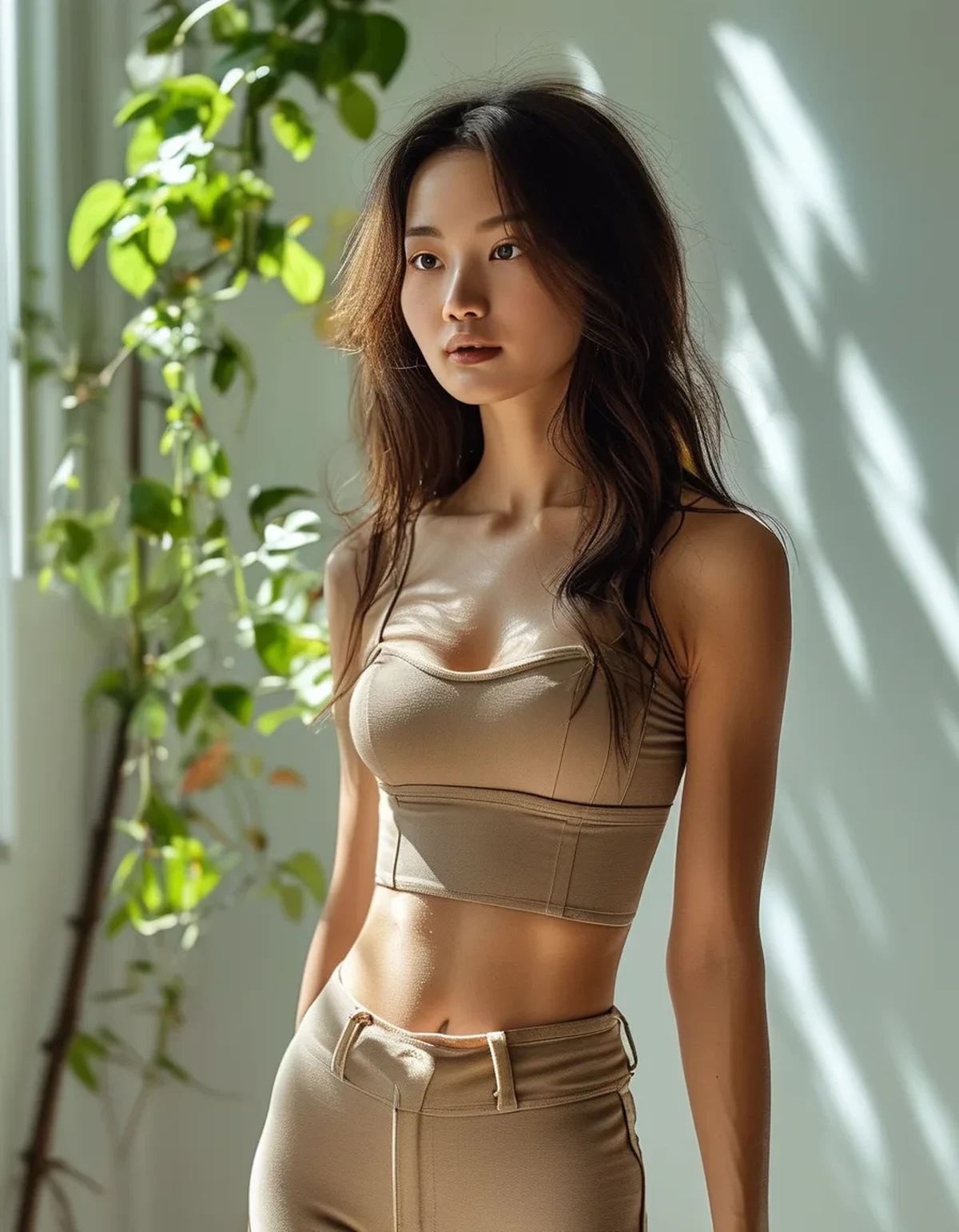
Seen here: High Waist 8” Yoga Shorts — shop similar styles on bubblelime.com
Keep Reading
This article is for general informational and styling purposes only. Fit, sizing, and product availability may vary.