Why Petite Sizing Varies So Wildly Between Brands - and How to Read a Size Chart
Quick Answer: There is no standardized definition of petite. Each brand sets its own height range, its own proportional adjustments, and its own idea of which measurements to shorten - so the same label means genuinely different garments. Some shorten only the length; others adjust rise, shoulder width, sleeve, and armhole position. The fix is to stop shopping by size name and start shopping by four numbers: your torso length, your inseam, your shoulder width, and your natural waist height. With those, any brand’s chart becomes readable.
Most petite frustration is a translation problem, not a fit problem.
Here is how to do the translation.

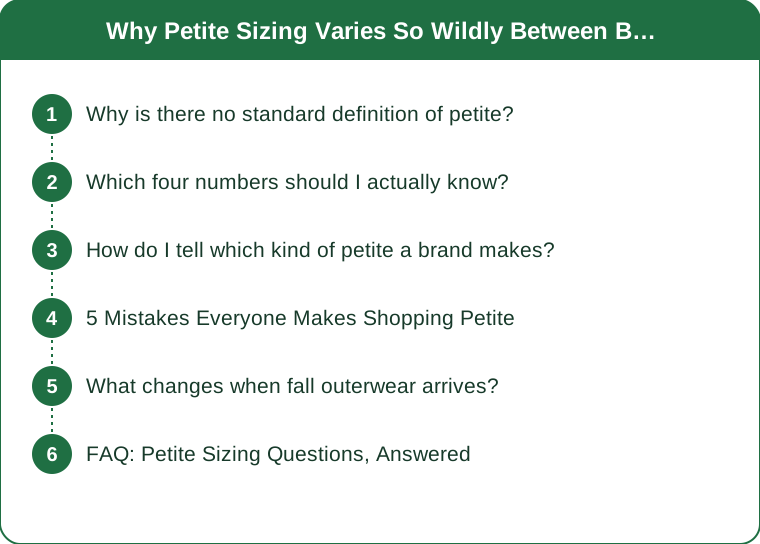
Why is there no standard definition of petite?
Because petite is a marketing category, not a regulated measurement.
Apparel sizing in general has no legally binding standard in the US. The voluntary standards that exist are used inconsistently, and each brand fits to its own house block.
Height cutoffs vary. Most petite lines target roughly 5’4” and under, but the exact range differs by brand - and some define it by torso length rather than by overall height.
And what gets shortened varies far more. This is the part that causes the real confusion:
- Length-only petites. The hem and sleeve are shortened and nothing else changes. The shoulder seam, armhole, and waist stay where they were - which is why some petite pieces still fit badly at the shoulder.
- Proportionally graded petites. Shoulder width, armhole depth, rise, sleeve, torso, and hem are all adjusted. This is what petite is supposed to mean and it is the more expensive way to make clothes.
- Scaled-down regulars. Some brands simply shrink the whole pattern, which changes width along with length - so it fits a smaller person, not a shorter one.
The practical consequence: two petite mediums from two brands can differ by two inches in torso length and an inch in shoulder width. The word on the tag tells you almost nothing without the chart behind it.
Which four numbers should I actually know?
These four make any chart readable. Measure once, keep them in your phone.
1. Torso length - shoulder to natural waist. Measure from the top of the shoulder, at the neck, straight down the front to the narrowest point of your waist. This is the number that determines whether tops, jackets, and dresses will work, and it is the one almost nobody knows. Petite frames vary here more than they vary in height.
2. Inseam - crotch to floor, barefoot. Take it from a pair of pants that fit and measure the inseam flat. Petite inseams commonly run 25-28 inches against a regular 30-32.
3. Shoulder width - seam point to seam point across the back. The distance between the bony points at the top of each arm. This is the measurement that cannot be altered cheaply, which makes it the one worth being strict about.
4. Natural waist height - floor to your narrowest point. This tells you where a high rise will actually sit on you, and whether a brand’s high rise will land at your waist or under your ribs.
Then compare against the garment’s flat measurements, not the size name. Many brands publish garment measurements alongside body measurements. Garment measurements are the honest ones - they describe the object rather than the intended customer.
And when only body measurements are given, look for the model’s height and the stated garment length. A 24-inch top on a 5’9” model tells you exactly where it will land on you: four to five inches lower.
How do I tell which kind of petite a brand makes?
Three checks, all doable before you buy.
Compare the petite and regular size charts side by side. Most brands publish both. If only the length numbers differ, it is a length-only petite. If shoulder, sleeve, rise, and torso all change, it is properly graded.
Check the shoulder measurement specifically. This is the tell. A properly graded petite jacket has a narrower shoulder than the regular of the same size. If it does not, the shoulder seam will sit out on your arm and the whole garment will read borrowed.
Read reviews for the phrase pattern. Reviewers on petite lines describe the same failures repeatedly. Look for mentions of the armhole sitting low, the waist seam sitting at the hip, or the sleeve being right but the shoulder wrong - all signs of length-only grading.
Then keep a personal list. Once you know that Brand A grades properly and Brand B only shortens hems, that knowledge is worth more than any general advice. Two or three brands that genuinely fit your torso length beat a wide search every season.
And note that a single brand is not consistent across categories. A brand may grade its trousers properly and its blazers by length only, because they are made in different factories to different blocks.

5 Mistakes Everyone Makes Shopping Petite
1. Sizing down instead of shopping petite. A smaller regular size is narrower everywhere, not shorter. You end up with the right sleeve length and a garment that is too tight through the shoulder and bust - and the proportions are still wrong.
2. Assuming petite means small. Petite is a height and proportion category, entirely independent of width. Many brands now offer petite across their full size range, and searching only the small sizes hides the pieces that would actually fit.
3. Buying regular and planning to hem. Hemming fixes length at the bottom and nothing else. The pocket placement, the knee break on a trouser, the waist seam, and the armhole are all still in the wrong place - and those are what make a garment read as ill-fitting.
4. Ignoring the shoulder because everything else fits. The shoulder is the most expensive thing to alter and the most visible when wrong. Fit the shoulder first and adjust everything else - that is the professional order and it is right.
5. Not measuring a garment you already love. The single most useful shopping tool you own is a piece that fits perfectly. Measure it flat - shoulder, length, sleeve, rise - and use those numbers as your target. It converts every online listing into a yes or no.
What changes when fall outerwear arrives?
Autumn is when petite sizing problems become most visible, because outerwear is where grading matters most.
Jackets and coats have the most structure to get wrong. Shoulder seams, armhole depth, and sleeve length all have to land correctly, and a length-only petite coat is immediately obvious in a way that a length-only petite tee never is.
Sleeve length is the fall giveaway. A sleeve that swallows the hand reads as borrowed regardless of everything else. Target the wrist bone, or slightly past it for a coat worn over layers.
Armhole depth is the hidden one. A low armhole restricts arm movement and adds bulk under the arm - the reason a coat feels awkward to move in even though it is the right size. Properly graded petite outerwear raises it.
Layering compounds every error. A jacket that fits over a tee may not close over a knit. Buy outerwear having tried it over the layers you will actually wear, which in September means bringing a sweater into the fitting room in advance.
And the timing is favorable. Fall outerwear lands in late August and early September at full price, but petite sizes in outerwear sell out early and get restocked rarely - so the trade is between buying early at full price and not getting it at all. For a coat you will wear for years, early is usually right.
FAQ: Petite Sizing Questions, Answered
Is petite the same as short?
Not exactly. Petite refers to overall frame proportions - shorter torso, narrower shoulders, shorter arms - not just to height. Some tall people have short torsos and fit petite tops better; some shorter people have long torsos and do not.
Should I get things tailored instead?
For a few key pieces, yes. Hemming and sleeve shortening are cheap and effective; shoulder adjustments are expensive. Buy for the shoulder, tailor the length.
Why does one brand’s petite fit me and another’s does not, at the same size?
Because they use different blocks, different height assumptions, and different grading approaches. This is normal and it is not you. Keep a short list of brands that work and check garment measurements everywhere else.
TL;DR:
- Petite is a marketing category with no standard definition - each brand shortens different things.
- Length-only petites leave the shoulder and armhole wrong, which is why some petite pieces still fit badly.
- Know four numbers: torso length, inseam, shoulder width, and natural waist height.
- Shop by garment flat measurements, not by size name; compare petite and regular charts to spot the grading.
- Fit the shoulder first - it is the most expensive thing to alter and the most visible when wrong.
Measure the one garment you love most this week and write the numbers down. It turns every confusing size chart into a straightforward yes or no.
See It in Motion
Seen here: Bootcut Yoga Pants with Side Pockets — shop it on bubblelime.com
Keep Reading
This article is for general informational and styling purposes only. Fit, sizing, and product availability may vary.