Why Petite Outerwear Fits Everywhere Except the Shoulders
Quick Answer: Petite sizing usually shortens sleeve and body length but scales shoulder width only slightly, so the shoulder seam lands past the edge of your shoulder. That single misplacement makes an otherwise correct coat look borrowed. Fit the shoulder first, buy for it, and alter everything else — because shoulder alterations are the one job that is expensive and often not worth doing.
The sleeves are the right length. The hem hits where you want. And in the mirror it still reads as your older sibling’s coat.
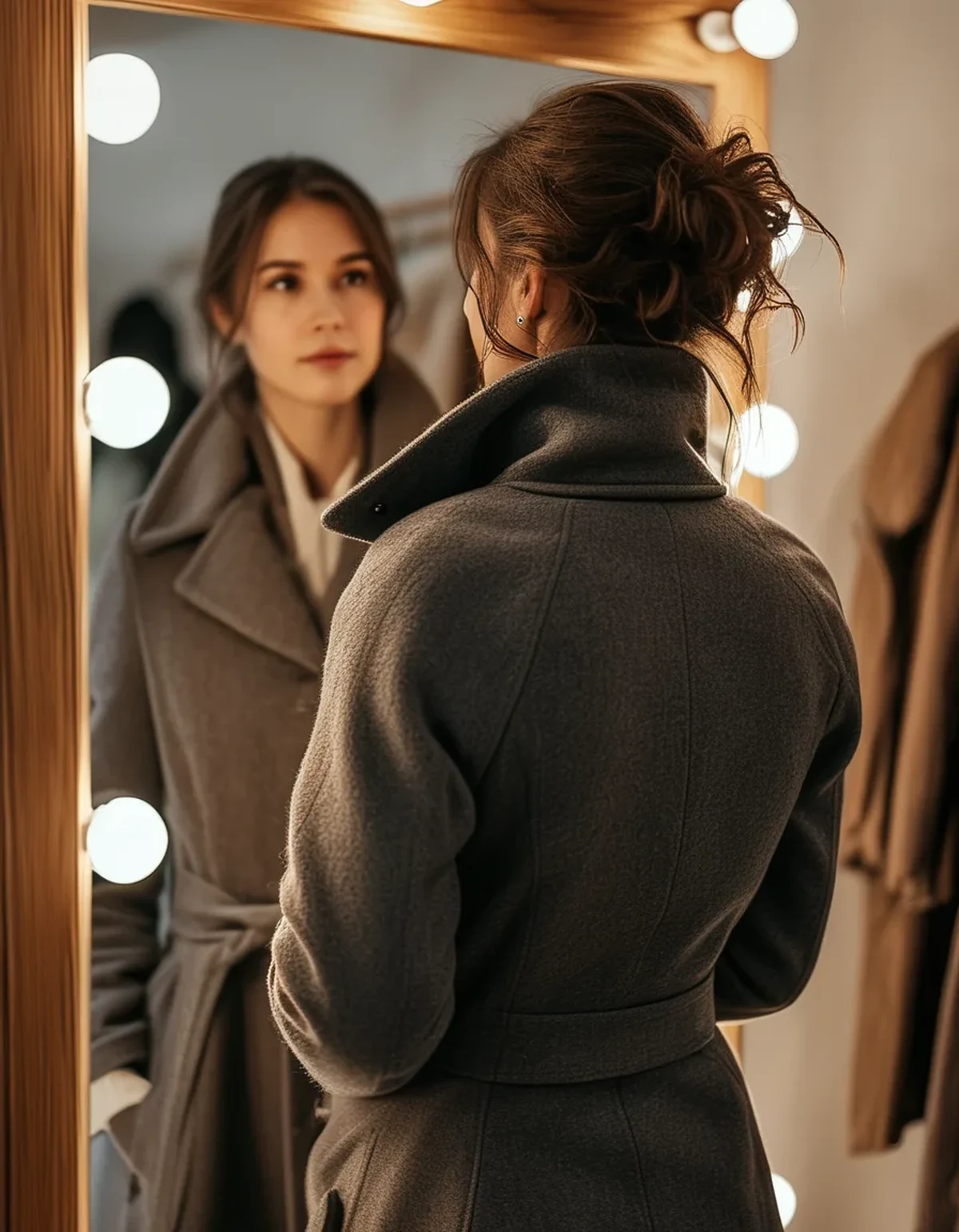
Look at the shoulder seam. It is almost certainly sitting an inch or more past the bony point of your shoulder, and that one detail overrides every other measurement in the garment.
Here is why it happens and how to shop around it.
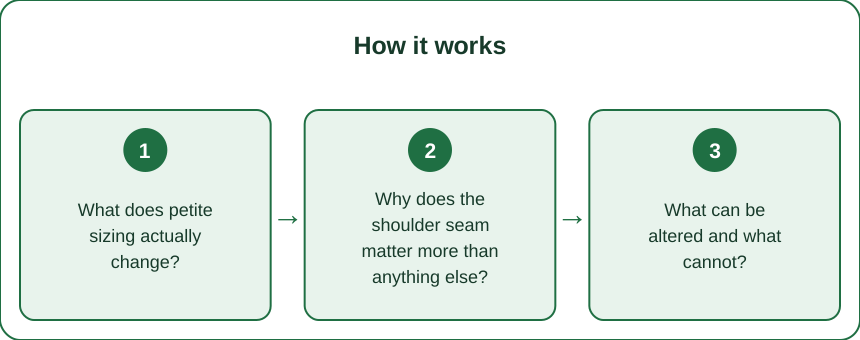
What does petite sizing actually change?
Less than the name suggests, and not always the dimensions you need.
Petite lines are typically built for a shorter overall height, and the reliable changes are vertical: shorter sleeve length, shorter body length, a higher waist placement, sometimes a shorter rise.
Horizontal measurements often scale barely at all, because a brand’s petite range is usually derived from the regular block rather than drafted independently. Shoulder width, chest circumference, and armhole depth may be nearly identical to the regular size.
This works acceptably for a knit top, where the fabric drapes over any small mismatch. It fails badly on structured outerwear, because a coat’s shoulder is built with padding, canvas, and a set-in sleeve. There is nothing forgiving about it — the seam goes exactly where the pattern put it, and your eye reads that line instantly.
The upshot: petite sizing solves your length problem and often leaves your width problem untouched. If your frame is narrow as well as short, petite alone will not get you there.
Why does the shoulder seam matter more than anything else?
Because it sets the frame that everything else hangs from, and because the eye is unusually good at reading it.
A correctly placed shoulder seam sits at the outer edge of your shoulder bone. From there the sleeve drops in a clean vertical line and the armhole sits where your arm actually pivots.
When the seam sits too far out, three things go wrong at once:
- The sleeve head collapses. You get a soft crease or a dimple just below the seam, which reads as sloppiness even to someone who could not tell you why.
- The armhole drops. The underarm sits low, restricting arm movement and creating diagonal drag lines across the chest.
- You look broader and shorter. A wide shoulder line on a small frame changes your apparent proportions in the exact direction you did not want.
The two-second check: put the coat on, find the bony point of your shoulder with your opposite hand, and see where the seam sits relative to it. Within about half an inch is fine. An inch or more out is a different coat.
What can be altered and what cannot?
This determines your whole shopping strategy, so it is worth knowing precisely.
Easy and cheap:
- Sleeve length — shortening from the cuff on most coats, and from the shoulder on a coat with cuff detailing (more expensive, still routine).
- Hem length — straightforward on most styles.
- Taking in the waist and side seams — routine.
Difficult and expensive:
- Narrowing the shoulders. This means detaching both sleeves, reshaping the shoulder and armhole, and resetting the sleeves — on a lined, structured garment with padding. It is often a significant portion of the coat’s price and the result depends heavily on the tailor.
- Reducing the armhole depth — same problem, same reason.
- Anything through a set-in sleeve head on a padded coat.
The rule that follows: buy for the shoulder, alter everything else. A coat that fits the shoulder and is too long everywhere is an easy, cheap fix. A coat that fits everywhere and is wide in the shoulder is a permanent compromise.
What Nobody Tells You About Petite Outerwear
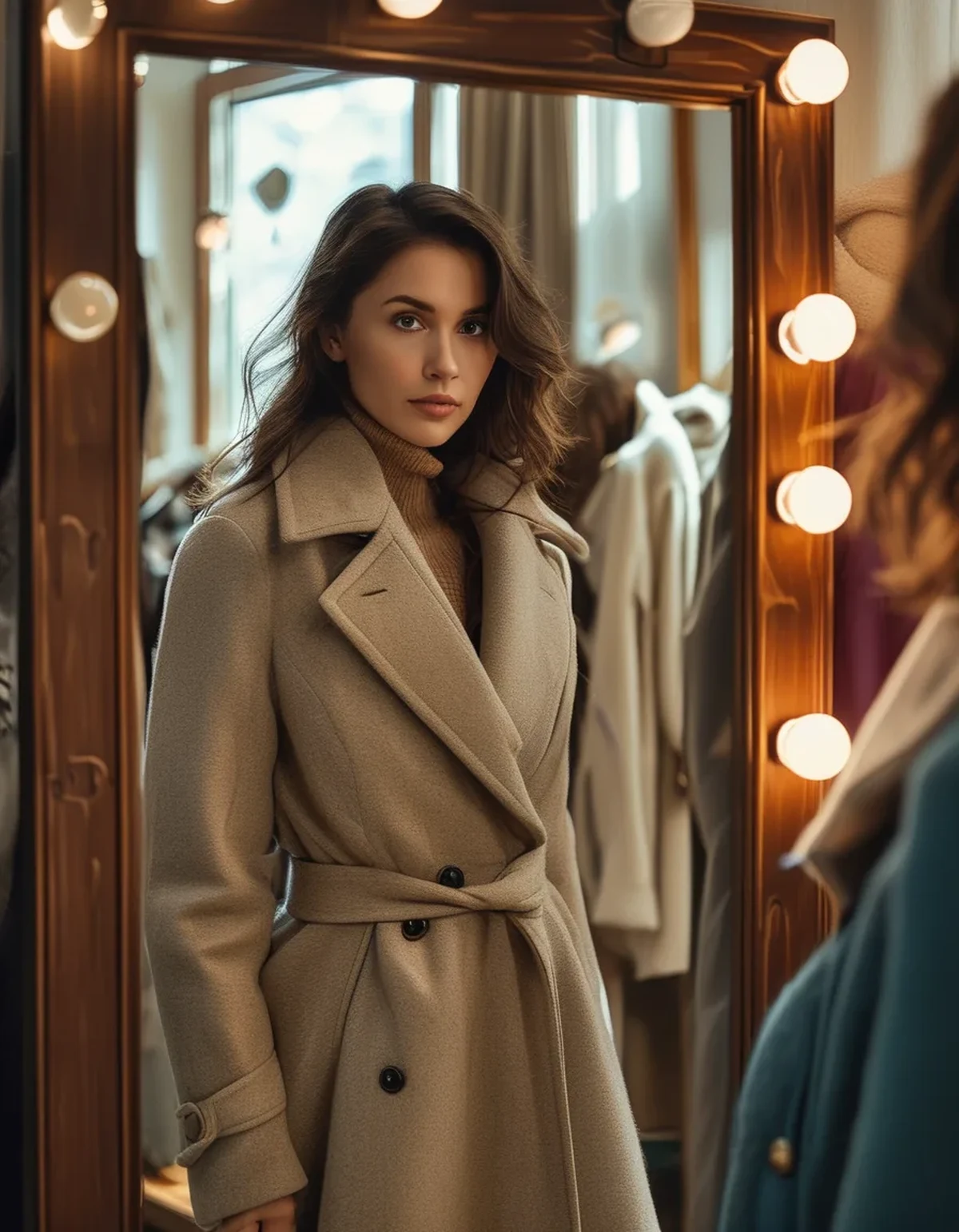
Unstructured coats are far more forgiving. A soft wrap coat, a raglan-sleeve style, or a dropped-shoulder design has no set-in shoulder seam to place wrongly. If petite outerwear consistently defeats you, this whole category is the answer.
Raglan sleeves are the petite frame’s best friend in outerwear. The diagonal seam runs to the neckline instead of across the shoulder, so there is no horizontal line to sit in the wrong place. Trench coats and many casual jackets use them.
Kids’ and teen outerwear is not the shortcut people suggest. The proportions differ at the chest and hip, and it usually looks like exactly what it is. Petite-specific brands and unstructured styles are better routes.
The lining tells you the quality of the alteration. When you are getting sleeves shortened, ask how the lining will be handled. A properly finished lining is the difference between a coat that looks tailored and one that looks tampered with.
Check the shoulder in a photograph, not a mirror. Mirrors flatten depth and you unconsciously stand differently. A photo from six feet away shows the shoulder line honestly, and it is often a surprise.
Try coats on over what you will actually wear. A coat fitted over a t-shirt will not close over a sweater, and layering is the whole point of a coat.
What should you look for when shopping?
A short, practical checklist that saves a lot of returns.
Check the shoulder seam first, before anything else. If it is wrong, put it back. Do not talk yourself into it because the color is perfect.
Look for raglan, dolman, or dropped-shoulder construction when structured coats consistently do not work. You give up some sharpness and gain a coat that actually fits.
Prefer brands that publish shoulder measurements. More are doing it. Measure a coat you own that fits and shop by that number rather than by size label.
Belted styles do double duty. They allow a slightly generous body while creating a defined waist, which is usually where a petite frame wants the eye anyway.
Watch pocket placement. Patch pockets on a shorter body often land at an odd height and add horizontal bulk exactly at the hip. Welt pockets and diagonal pockets sit better.
Check the collar scale. An oversized collar on a small frame swamps the neck and shortens the whole silhouette. Collar and lapel width should be proportional to your frame, not to the coat’s design ambitions.
FAQ: Petite Outerwear Fit Questions, Answered
Is it worth paying to have shoulders narrowed on a coat I love?
Occasionally, on an expensive coat with an excellent tailor. Usually not. Get a quote first — it is frequently a large fraction of the coat’s price, and on a heavily structured or padded garment the result can still be visibly compromised. Spend that money on a better-fitting coat instead.
Why do petite coats still have long sleeves?
Because sleeve length is drafted from the shoulder seam, and if the shoulder seam is sitting too far out, the sleeve effectively starts too far down your arm. Sleeves that seem long despite a petite label are often a shoulder problem wearing a different disguise.
Should I size down to fix the shoulders?
Sometimes it works, and check what you lose. Sizing down narrows the shoulder and also narrows the chest and reduces layering room. If you can size down and still close the coat comfortably over a sweater, it is a good solution. If it pulls across the back, you have traded one bad fit for another.
TL;DR:
- Petite sizing usually shortens vertically and barely changes width, so shoulder seams land past your shoulder point.
- A misplaced shoulder seam collapses the sleeve head, drops the armhole, and makes you look broader and shorter.
- Sleeves, hems, and waists are cheap to alter. Shoulders are expensive and often not worth it.
- Buy for the shoulder and alter everything else — that one rule fixes most petite outerwear shopping.
- Raglan and unstructured styles sidestep the problem entirely and are worth defaulting to.
Check the seam against your shoulder bone before you look at anything else. It takes two seconds and it will save you from most of the coats that look almost right.
See It in Motion
Seen here: High Waist Bootcut Yoga Pants with Hidden Pocket — shop it on bubblelime.com
Keep Reading
This article is for general informational and styling purposes only. Fit, sizing, and product availability may vary.