Why Three Layers Overwhelm a Petite Frame and Two Never Do
Quick Answer: Layering adds hemlines and volume, and both cost proportionally more on a shorter frame. Three layers typically produce three visible hems in the space where a taller frame has room for them to separate cleanly, so they crowd instead. The fix is not fewer clothes, it is layers that share a hemline, one long vertical, and thinner high-warmth pieces so you get three layers of warmth with two layers of visual weight.
The outfit works with a top and a jacket.
Add a cardigan between them and it collapses — suddenly you look shorter, rounder and slightly lost in it.
Same three pieces on a taller frame would look considered.
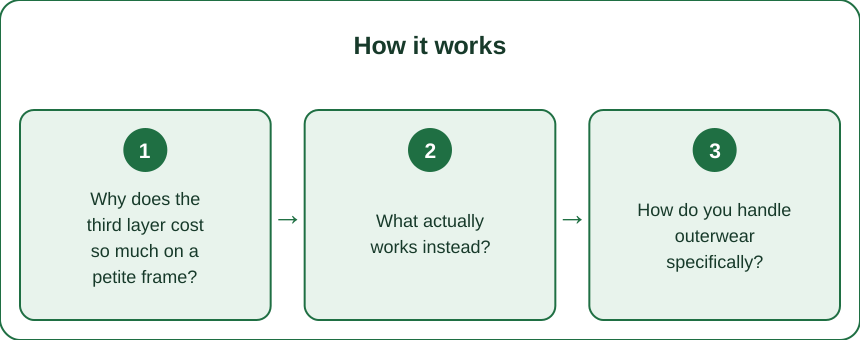
Why does the third layer cost so much on a petite frame?
Because the frame is shorter but the layers are not proportionally thinner.
Every layer creates a hemline. Three layers means three horizontal breaks, and horizontal breaks divide vertical space. On a shorter torso the divisions land closer together, which reads as clutter rather than structure.
Bulk is absolute, not proportional. A jumper adds roughly the same few centimetres of thickness regardless of who wears it, so it occupies a larger share of a smaller silhouette.
Shoulder and neck volume rises fast. Three collars, three necklines, three shoulder seams. Neck area is where layering bulk concentrates, and a shorter neck has less room to absorb it.
Sleeve stacking is a real problem. Three sleeve ends at the wrist, none of which were cut for the same arm length, produce visible bunching at exactly the point the eye uses to judge proportion.
Length ordering gets harder. Good layering usually requires each layer to be distinctly longer or shorter than the one under it. Petite sizing compresses those length differences until they overlap awkwardly.
And the total colour count rises. Three garments means potentially three colours, and colour blocking a short torso into thirds is the fastest way to lose height.
What actually works instead?
Get three layers of warmth with two layers of visual weight. That is the whole trick.
Share a hemline. If two layers end at the same point, the eye reads one break instead of two. A jumper and jacket ending together is far cleaner than one ending 6cm above the other.
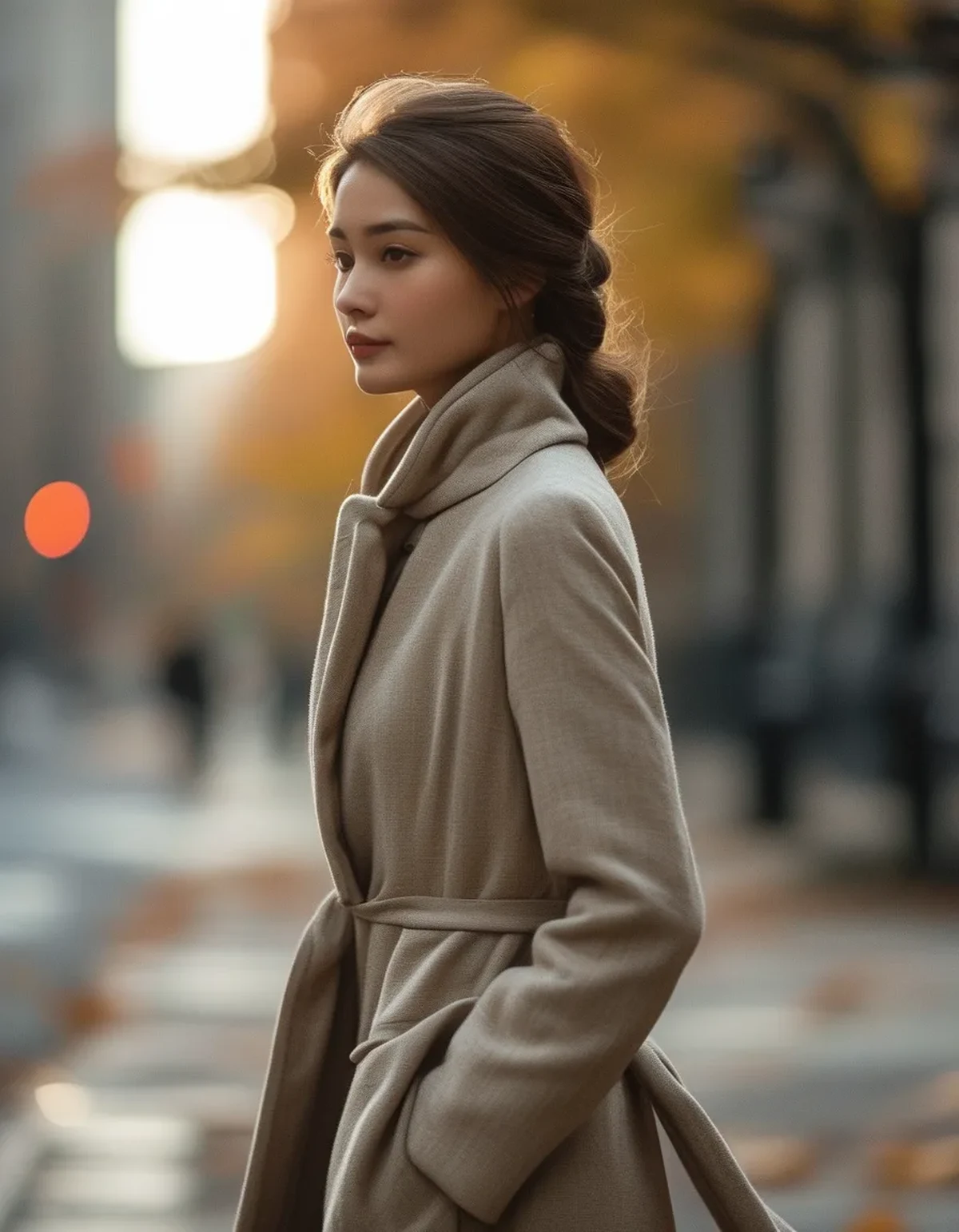
Keep one long vertical. An open long coat or cardigan creates two strong vertical lines down the body, which counteracts the horizontals the other layers create. This is why a long coat over two layers often works better than a short one.
Use thin, high-warmth pieces for the middle. A thin merino or technical base under a jumper gives you the warmth of three layers with the visual bulk of two.
Make the middle layer disappear. If the middle piece matches the base in colour, it stops registering as a separate layer entirely.
Keep sleeves clean. Base layer sleeves should not show. Push them up, choose three-quarter, or buy the base in petite sizing specifically.
Limit yourself to two colours. Three garments, two colours. This single rule solves most petite layering problems without changing anything you own.
How do you handle outerwear specifically?
Outerwear is where petite layering usually fails, and the choice is more constrained than for a taller frame.
Long coats beat mid-length coats. A coat ending at mid-thigh cuts the leg at its widest point. A coat below the knee creates an unbroken vertical. Counterintuitively, longer is usually more lengthening on a petite frame.
Cropped jackets work only with high-rise below. A cropped jacket over a high waistband reads as a deliberate short-over-long proportion. Over a mid-rise, it just looks too short.
Avoid the in-between. A jacket ending at the widest point of the hip is the least flattering length available and it is, unfortunately, the most common one.
Check the shoulder before anything else. Petite outerwear frequently fits everywhere except the shoulder, and a shoulder seam hanging past the joint adds visual width that no amount of styling recovers.
Sleeve length is worth altering. A coat sleeve 3cm too long is the single most common petite outerwear problem, and shortening it is inexpensive relative to how much it changes.
Seasonal note: early autumn is the hardest layering period of the year, because the temperature spread within one day is largest. This is exactly when people default to three layers. Instead, use a thin high-warmth base plus one removable outer, so the outfit remains a two-layer look at both ends of the day.
5 Petite Layering Mistakes That Are Easy to Fix
Three visible hemlines. The core problem. Make two of them share a line and the outfit resolves instantly.
A bulky middle layer. The middle is the one layer nobody sees properly. Make it thin and warm rather than thick and decorative.
Mid-thigh outerwear. The least flattering coat length, and the most commonly bought one. Go longer or clearly shorter.
Three colours in three layers. Two colours across three garments keeps the vertical intact.
Base layer sleeves showing at the wrist. It reads as an ill-fitting outfit rather than a layered one, and it draws the eye to the exact point where proportion is judged.
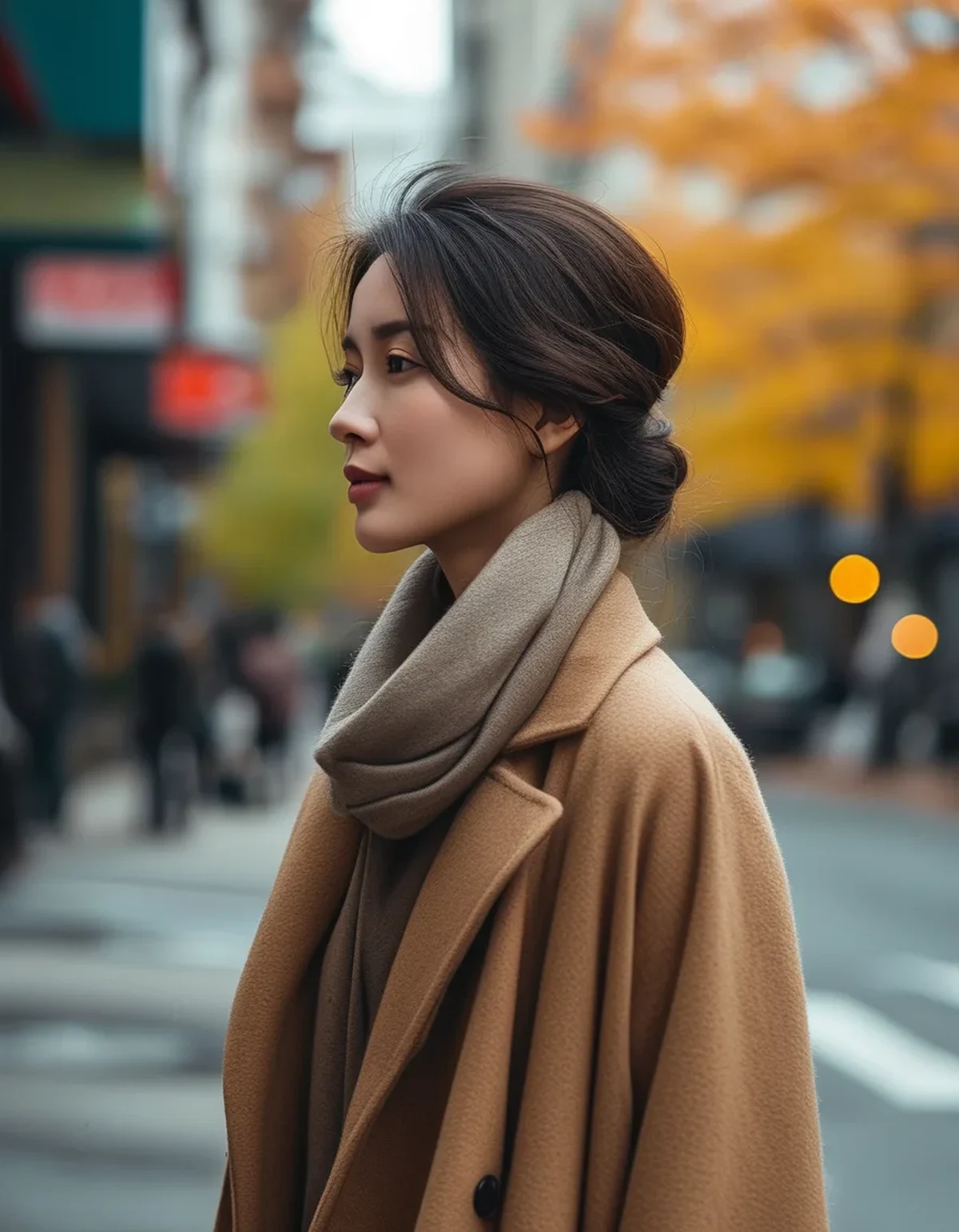
And the one that surprises people: a scarf counts as a layer. A voluminous scarf on top of three layers adds a fourth horizontal at the neck, which is the worst position for it on a short frame. If you want the scarf, drop a layer.
FAQ: Petite Layering Questions, Answered
Can petite frames wear long coats?
Yes, and they usually work better than mid-length ones. Length creates verticals; mid-thigh creates a break at the widest point.
How do I layer without looking bulky?
Thin, high-warmth middle layers and shared hemlines. Warmth and visual bulk are separable.
Should I buy everything in petite sizing?
Base layers and anything with sleeves, yes. Outerwear is worth buying in whatever fits the shoulder and altering the sleeves.
What about oversized styles?
One oversized piece works if everything else is fitted. Two oversized pieces on a petite frame is where it goes wrong.
Does a belt help?
Over a coat, often yes, because it restores a waist that layers obscured. Over three layers of bulk, it can add width instead. Test it.
What is the simplest rule to remember?
Three layers of warmth, two layers of visual weight, two colours, one long vertical.
TL;DR:
- Each layer adds a hemline and absolute bulk, both of which cost more on a shorter frame.
- Aim for three layers of warmth, two layers of visual weight.
- Make two layers share a hemline, and keep one long vertical.
- Long coats beat mid-thigh coats; check the shoulder seam before anything else.
- Two colours across three garments, and never let base sleeves show.
Try it with what you already own: match two hemlines and drop one colour. It is the same outfit and a completely different result.
See It in Motion
Seen here: Bootcut Yoga Pants with Side Pockets — shop it on bubblelime.com
Keep Reading
This article is for general informational and styling purposes only. Fit, sizing, and product availability may vary.