Why Midi Dresses Land Wrong on Petite Frames, and What Lengths Work
Quick Answer: Midi dresses are drafted on fit models around 5’9, with the hem targeted at the narrow zone below the calf muscle. Subtract five to eight inches of height — most of it leg — and that same hem lands squarely on the widest part of the calf or drops to the ankle, both of which cut the leg at maximum-width points and visually shorten it. The fix is not avoiding the category; it is re-targeting the hem: just below the knee, the true below-calf narrow point, or a full maxi — and knowing which alteration turns a wrong midi into a right one.
The midi is genuinely the hardest length to wear below about 5’4. Here is the geometry, and the workarounds that beat it.
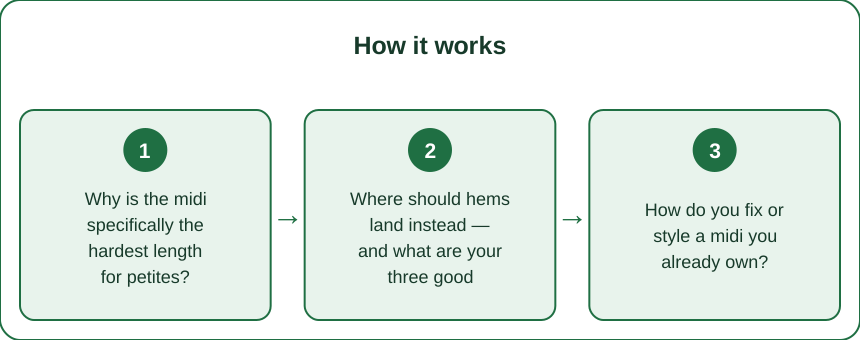
Why is the midi specifically the hardest length for petites?
Because a midi is a precision length pretending to be a casual one.
Every hem creates a horizontal line, and a horizontal line reads best at a narrow point of the leg — and worst at a wide one. The classic midi is engineered to hit the sweet spot below the calf muscle where the leg tapers toward the ankle: narrow point, clean line, elegant result. On the 5’9 fit model, that is exactly where twelve to fourteen inches of drop from the knee lands.
On a 5’2 frame, the same garment measurement travels a shorter leg. The hem arrives either mid-calf — the single widest point below the knee — or past the taper entirely, hovering awkwardly above the ankle in the no-man’s-land that reads as a maxi that shrank. Both outcomes cut the visual leg at a point that makes the remaining leg look shortest.
And the error compounds: cutting the leg at a wide point does not just shorten the leg below the hem — it re-proportions the whole silhouette, because the eye measures the visible leg against the dress mass above it. A petite frame in a wrongly-landed midi reads as mostly dress.
This is why the midi feels personal — the same rack that fails you serves the 5’9 shopper perfectly, with no tag anywhere admitting the length was a measurement, not a mood.
Where should hems land instead — and what are your three good targets?
Petite hems have three reliable homes, each with a different personality.
Target one: just below the kneecap. The knee-graze length — hem within an inch below the knee — sits at a natural narrow point, shows the maximum flattering leg line, and reads polished in every context from office to wedding guest. For most petite frames this is the highest-percentage dress length in existence, and it is what many midis become with one alteration.
Target two: the true below-calf point — your midi, not the rack’s. The narrow zone below the calf muscle exists on every leg; on a petite leg it simply sits higher than manufacturers aim. Find yours in a mirror — the visible taper, usually eight to ten inches above the floor barefoot — and a hem there delivers the actual elegant-midi effect. Buying petite-line midis gets you close; altering standard ones gets you exact.
Target three: the honest maxi. Floor-adjacent lengths work beautifully on petite frames when two conditions hold — the hem clears the ground in your actual shoes, and the dress has vertical structure: a defined or raised waist, and ideally front buttons, a slit, or seaming to run the eye upward. A puddling maxi reads as engulfing; a skimming one reads as a column, and columns lengthen.
The zone to avoid is the one the rack keeps selling you: the four inches centered on the widest calf. Nothing styles that away reliably — relocating the hem is the fix, and a tailor does it for less than the dress cost.
How do you fix or style a midi you already own?
In order of effectiveness — one structural move, then the styling assists.
Hem it to a target. The permanent fix. Take it to the knee-graze for versatility or up to your true below-calf point to keep the midi character. Straight and A-line skirts hem cheaply; bias cuts, pleats, and tiered ruffles are harder or impossible — which is worth checking before you buy the next one.
Raise the waist. A belt or the dress’s own tie, cinched slightly above your natural waist, moves the visual leg-start line up and can shift where the hem falls. On wrap and shirt dresses this sometimes single-handedly relocates the hem an inch — enough to clear the widest calf.
Close the shoe gap. Shoes that continue the leg — tonal to your skin or to the dress, with a low vamp — extend the line through the awkward hem zone. An ankle strap adds a second horizontal cut two inches below the first, which is why the strappy sandal so often makes a borderline midi worse.
Run a vertical through it. Front-button plackets left open below the knee, a walking slit, or a vertical print seam gives the eye a path across the horizontal line. The same logic that puts front seams on flare yoga pants applies to dresses: an internal vertical beats fighting the hem.
Match hem to boot in the cold months. A midi meeting a knee boot in the same tonal family eliminates the cut entirely — the autumn-ready rescue for midis that fail with bare legs, and worth remembering as September approaches.
Five Petite Dress Mistakes That Have Nothing to Do With Height
Buying the fabric weight wrong for the length. A long hem in stiff fabric stands away from the body and adds visual mass exactly where a petite frame can least absorb it. In longer lengths, drape is non-negotiable — the fabric should fall, not tent.
Trusting the size chart over the length chart. Petite shoppers check bust and waist and skip the garment-length line, which is the number that actually decides the outcome. Measure a dress that works and shop by that figure.
Oversleeving the silhouette. Voluminous statement sleeves at a wide hem length double the engulfment. Pick one volume zone per dress; a fitted sleeve rescues many a rescued midi.
Print scale drift. A print drafted to repeat four times across a 5’9 frame repeats three times on yours and reads louder. Smaller, denser prints keep the same energy at petite scale — and vertical-leaning prints assist the hem problem instead of aggravating it.
Judging in the mirror barefoot. Every length verdict changes with the intended shoe. Hem, buy, and reject dresses only in the shoes they will live with — the quarter-inch a sneaker versus a heel moves the hem is regularly the whole difference at the calf.
FAQ: Petite Dress Lengths, Answered
Are petite-line midis actually cut differently, or just shorter?
Good petite lines re-draft proportionally — waist placement raised, hem re-targeted below the calf — rather than just trimming length. Test with one measurement: if the waist seam sits at your waist and the hem finds your taper, the re-draft is real. If only the hem moved, it is a shortened standard cut.
I love the ankle-length look. Can I keep it?
Yes — commit fully to maxi rather than hovering. Clear the ground by an inch in your real shoes, keep the fabric fluid, and add one vertical element. The failure mode is the in-between hover, not the length itself.
What is the single best petite dress length for one-dress travel?
Knee-graze, in a knit that resists wrinkles. It survives every dress code, pairs with sneakers and heels alike, and never argues with the calf. It is the length equivalent of a neutral.
Do tiered and ruffled midis follow the same rules?
Mostly, with one addition: tiers add horizontal lines above the hem, so a wrongly-landed tiered midi cuts the leg twice. If you love tiers, be stricter about the hem target — or choose tiered minis and maxis, where the geometry is friendlier.
TL;DR:
- Midis are drafted to hit below the calf on 5’9 fit models; on petite frames the hem lands mid-calf or ankle — the two worst points.
- Three good targets: knee-graze, your true below-calf taper, or a committed ground-skimming maxi with vertical structure.
- The tailor is the real fix; belts, low-vamp shoes, open plackets, and hem-to-boot matching are the assists.
- Buy by garment length in your actual shoes, keep drape in long lengths, and never accept the widest-calf hover.
Tonight, try on the midi that never quite works and pin it to knee-graze with clips. Photograph before and after — that pair of pictures is usually the most persuasive argument a tailor appointment will ever get.
See It in Motion
Seen here: High Waist Bootcut Yoga Pants with Pockets — shop it on bubblelime.com
Keep Reading
This article is for general informational and styling purposes only. Fit, sizing, and product availability may vary.