Why Bag and Scarf Scale Changes Petite Proportion More Than Clothes
Quick Answer: Accessories set the scale reference your eye uses to judge everything else in an outfit, and they sit high on the body where the eye lands first. An oversized bag, a bulky scarf, or a wide-brimmed hat makes a petite frame read smaller by comparison, while a well-scaled version does the opposite. The most reliable guides are that a bag should not extend past the width of your torso, a scarf should be in a fine enough fabric to sit close to the neck, and volume should be concentrated at one point rather than distributed across three.
You have done the work. The jacket ends where it should, the trousers are the right length, the rise is right for your torso.
Then you add the bag you have carried for three years and the whole outfit reads shorter and slightly swamped. This blog has covered jacket length, inseam maths, and sleeve length extensively, and accessories are the part of the proportion equation nobody sizes at all.
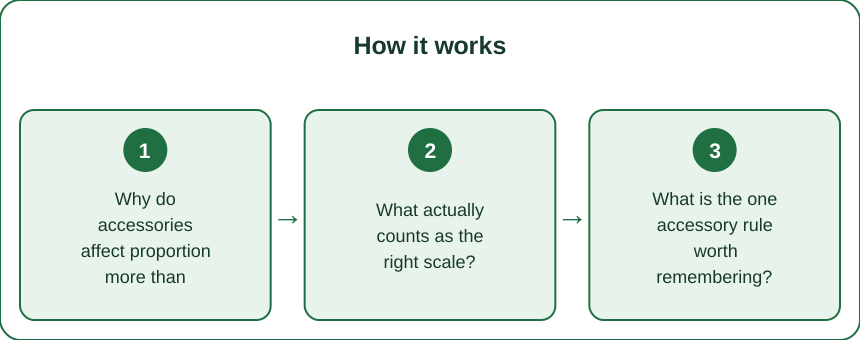
Why do accessories affect proportion more than clothing does?
Because of where they sit and because your eye uses them as a ruler.
Scale is always relative. There is no absolute size that reads as large or small. Your eye judges everything against the nearest reference, and in an outfit the reference is whatever has a familiar known size. A bag, a phone, a coffee cup, and a scarf are all objects with a standard size in your viewer’s mind.
Which makes accessories the measuring stick. When a bag that is known to be large appears next to a torso, the eye reads the torso as small. Clothing does not do this, because clothing is made in sizes and has no fixed reference. A jacket does not tell your eye how big it is in absolute terms. A tote does.
Position amplifies it. Accessories are concentrated in the upper half of the body, at neck, shoulder, and hand height. The eye enters an outfit at the face and works down, so anything in that zone gets weighted more heavily than something at the hem.
Volume near the face is the highest-leverage zone of the whole outfit. This is why a bulky scarf changes the read of an outfit more than a bulky jumper does, despite involving far less fabric.
The practical implication. If you have limited time or budget to fix proportion, accessories give the fastest return, because getting them right requires no alterations and no new clothes.
What actually counts as the right scale?
Reference points rather than rules, since frames vary.
For bags:
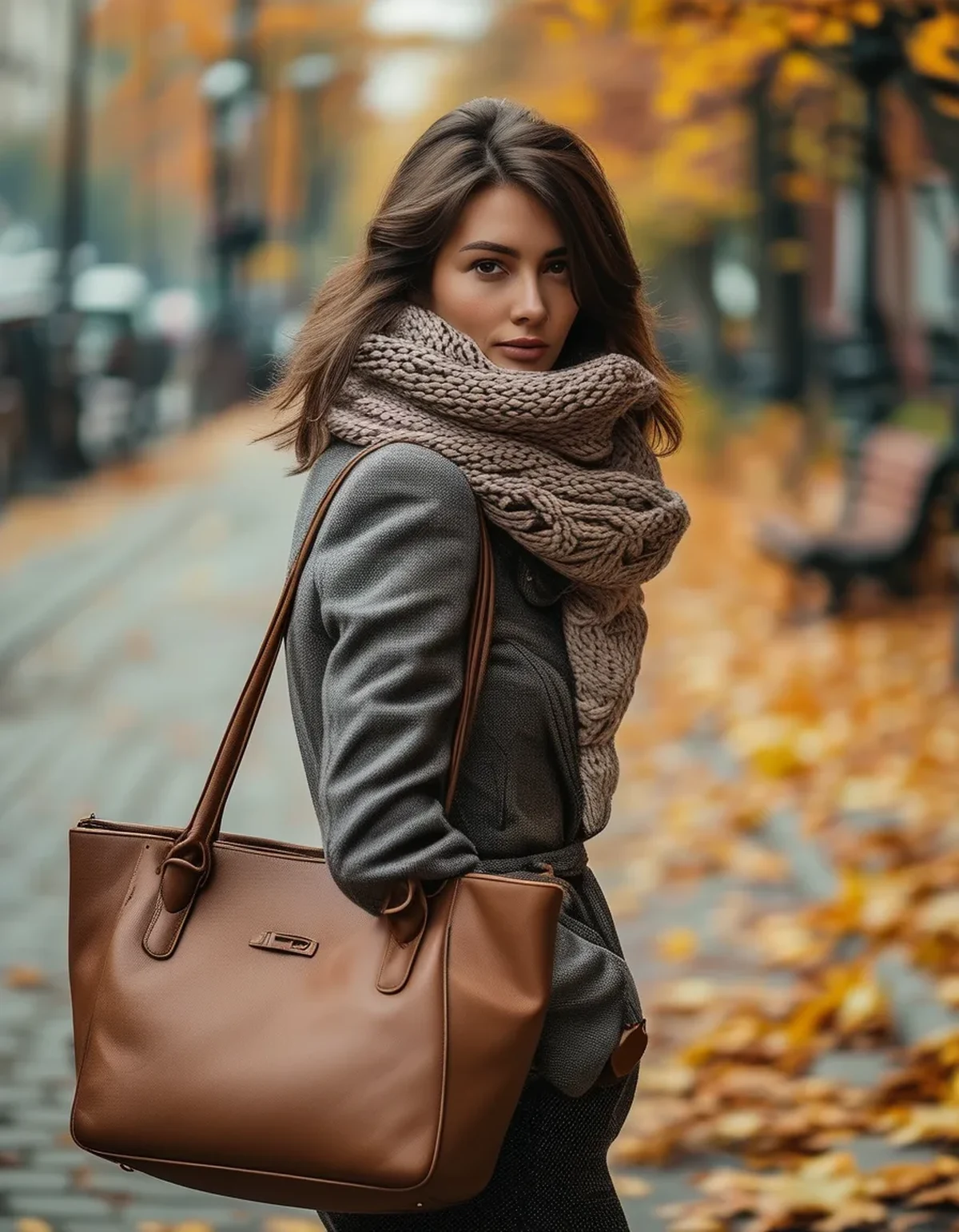
- Width. A bag should not be wider than your torso at its widest point. This is the single most useful check and it disqualifies most oversized totes on most petite frames.
- Drop length. A shoulder or cross body strap that lands at the hip creates a break at the widest point. Shortening the strap so the bag sits at the waist raises the break and lengthens the leg line, which is exactly the mechanism covered elsewhere on this blog.
- Structure over slouch. A structured bag holds a defined shape and reads as intentional. An unstructured slouchy bag expands to whatever it contains and tends to spread across the body.
- A useful rough scale. Mid-size structured shoulder bags, small totes, and top-handle bags in a shape roughly the width of your torso work reliably. The oversized weekend tote and the very small micro bag both create scale contrast, in opposite directions.
For scarves:
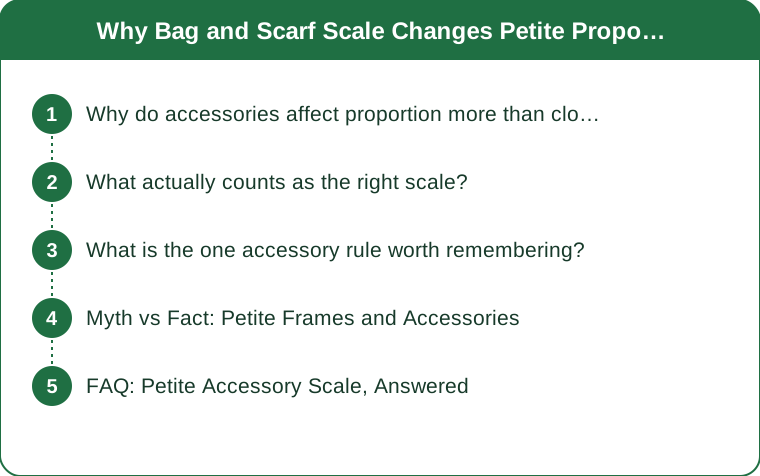
- Fabric weight matters more than length. A long scarf in a fine wool or silk sits close to the neck and adds vertical line. A short scarf in a chunky knit adds bulk at the jaw and shortens the neck.
- How you tie it decides the effect. A long draped scarf hanging vertically lengthens. A bulky loop at the throat shortens.
- Avoid volume that reaches the jawline. The moment a scarf touches the jaw, it visually shortens the neck and compresses the head into the shoulders.
For other items:
- Sunglasses should not extend past the width of your face, which is the same principle applied to a smaller object.
- Hat brims wider than your shoulders create the strongest scale contrast of any accessory.
- Jewellery follows the same logic: a fine chain lengthens the neckline, a chunky short necklace cuts it.
What is the one accessory rule worth remembering?
One point of volume, and everywhere else stays close to the body.
The failure mode is distributed volume. A bulky scarf, an oversized bag, and a voluminous coat together are three separate scale contrasts, and the effect compounds rather than balancing out. Each one alone would be a choice. All three read as being lost inside the outfit.
So choose the one. If the coat is oversized this season, keep the bag structured and mid-size and the scarf fine. If the scarf is the statement, keep the bag small and the outerwear closer to the body.
This is the most transferable rule in petite styling because it applies regardless of trends. Oversized outerwear will keep coming back, and the rule tells you what to do with the rest of the outfit rather than telling you to avoid it.
Colour continuity does a lot of work here. A bag in a tone close to the outfit reduces its visual weight considerably. A high-contrast bag reads as a separate object and asserts its scale. This is the same tonal principle this blog has covered in monochrome styling.
And the practical shopping test. Take a photo of yourself with the bag in a full-length mirror rather than judging in the shop’s mirror at close range. Scale problems are almost invisible from three feet away and obvious in a photo from ten.
Seasonal note. The transition into autumn is where this fails most often, because scarves, larger bags, and heavier outerwear all arrive at once. The single-point-of-volume rule matters more in October than in July.
Myth vs Fact: Petite Frames and Accessories
Myth: Petite frames should only carry small bags. Fact: A micro bag creates the same scale contrast in the opposite direction and can look like a prop. Mid-size and proportionate is the target, not small. A bag roughly the width of your torso reads as normal rather than as either extreme.
Myth: Long scarves overwhelm shorter frames. Fact: Length is fine and bulk is the problem. A long fine-weight scarf hanging in a vertical line is genuinely lengthening. A short chunky one wrapped at the throat is the version that shortens.
Myth: Big accessories make you look bigger, which is good. Fact: Scale contrast works the other way. Placing a known-large object next to your frame gives the eye a reference that makes the frame read smaller by comparison.
Myth: Cross body bags are always the best choice. Fact: They are practical, and the diagonal strap cuts across the torso and the bag typically lands at the hip, creating two breaks. Shortening the strap so it sits at the waist fixes most of it.
Myth: Accessories are the finishing touch, so they matter least. Fact: They sit at eye level and act as the scale reference for the entire outfit. They are frequently the highest-leverage element and the one most people never reconsider.
Myth: You need to buy new accessories to fix this. Fact: Shortening a strap, changing how you tie a scarf, and choosing a bag you already own in a closer tone all cost nothing and account for most of the available improvement.
FAQ: Petite Accessory Scale, Answered
What size bag suits a petite frame?
A bag no wider than your torso at its widest point, structured rather than slouchy, with a strap short enough that it sits at your waist rather than at your hip. Mid-size works better than either very large or very small.
Do scarves make a petite frame look shorter?
Only bulky ones tied close to the jaw. A long scarf in a fine fabric, draped in a vertical line, lengthens the neckline. Fabric weight and how you tie it matter far more than length.
What is the simplest rule to follow?
One point of volume per outfit. If the coat is oversized, keep the bag and scarf close to the body. Distributed volume across three accessories is what reads as being swamped, not any single item.
TL;DR:
- Accessories act as the scale reference your eye uses, and they sit at eye level where they carry the most weight.
- Keep a bag no wider than your torso, structured, with the strap short enough to sit at the waist rather than the hip.
- Scarf bulk matters far more than scarf length. Fine fabric draped vertically lengthens; chunky at the jaw shortens.
- One point of volume per outfit. Distributed volume across coat, bag, and scarf is what reads as swamped.
Photograph yourself in a full-length mirror with the bag you carry daily. Scale problems are invisible up close and obvious in a photo.
See It in Motion
Seen here: Super High Waist Embossed Yoga Leggings with Inner Pocket — shop it on bubblelime.com
Keep Reading
This article is for general informational and styling purposes only. Fit, sizing, and product availability may vary.