Petite Dressing Isn't About Smaller Clothes — It's About Proportion
Quick Answer: Petite dressing works best when you balance proportion — waist placement, hem length relative to your leg, and vertical lines — rather than just buying items labeled ‘petite.’ A high-rise bottom and a hem that hits above the widest part of your calf will do more than the size label alone.
You bought the petite cut. It still doesn’t look quite right. That’s because petite sizing shortens length, but proportion — where your eye breaks the outline — is a separate problem it doesn’t automatically solve.

Why do petite-labeled clothes sometimes still look off?
Petite sizing typically shortens the torso and inseam uniformly, but it doesn’t adjust proportion relative to your specific waist-to-hip and leg-to-torso ratio. Two petite women of the same height can need completely different hem lengths and rise heights.
The fix is trying pieces on and checking where the eye naturally breaks — not trusting the label alone.
What is the single highest-impact proportion rule?
Hems that end at the narrowest point of your leg (just above the ankle, just below the knee, or mid-thigh) elongate. Hems that land at the widest point (mid-calf, right at the ankle bone) visually shorten and widen.
This one rule affects pants, skirts, and dresses more than any fabric or color choice.

What Nobody Tells You About Petite Layering
Layering is usually framed as risky for petite frames, but the real issue is layer length stacking, not layering itself. A cropped jacket over a longer top creates a clean break; a hip-length jacket over a hip-length top creates one long, bulky block.
The trick: each visible layer should end at a different point on your body, ideally 3+ inches apart. Three layers ending at nearly the same spot is what reads as ‘swallowed,’ not the number of layers itself.
How does rise height change your whole outline?
A high-rise bottom (sitting at or above the natural waist) lengthens the leg line by visually starting it higher, often adding the equivalent of an inch or more to apparent height. Low-rise bottoms do the reverse, shortening the torso-to-leg ratio.
This matters more for petite frames than almost any other single styling choice, including heel height.
FAQ: Petite Styling Questions, Answered
Should petite women avoid maxi dresses?
No — a maxi with a high leg slit or one worn with heels can work well. The risk isn’t length itself, it’s a hem that drags at the widest point of the ankle.
Do horizontal stripes really make petite frames look shorter?
Wide horizontal stripes can compress vertical line, but thin stripes or stripes only on part of a garment don’t have the same strong effect — it’s about stripe width, not the concept of horizontal alone.
Is petite sizing worth paying more for versus altering regular sizing?
For pieces with structured proportions (blazers, tailored pants), petite sizing usually saves more in alteration costs than it adds in price.
TL;DR:
- Petite sizing shortens length but doesn’t fix proportion — check where hems land on your body
- Hems ending at the narrowest point of the leg elongate; widest point shortens
- Stack layers that end at different lengths, at least 3 inches apart
- High-rise bottoms add apparent height more than almost any other single change
Try proportion rules before assuming a piece ‘just isn’t for petite frames.‘
See It in Motion
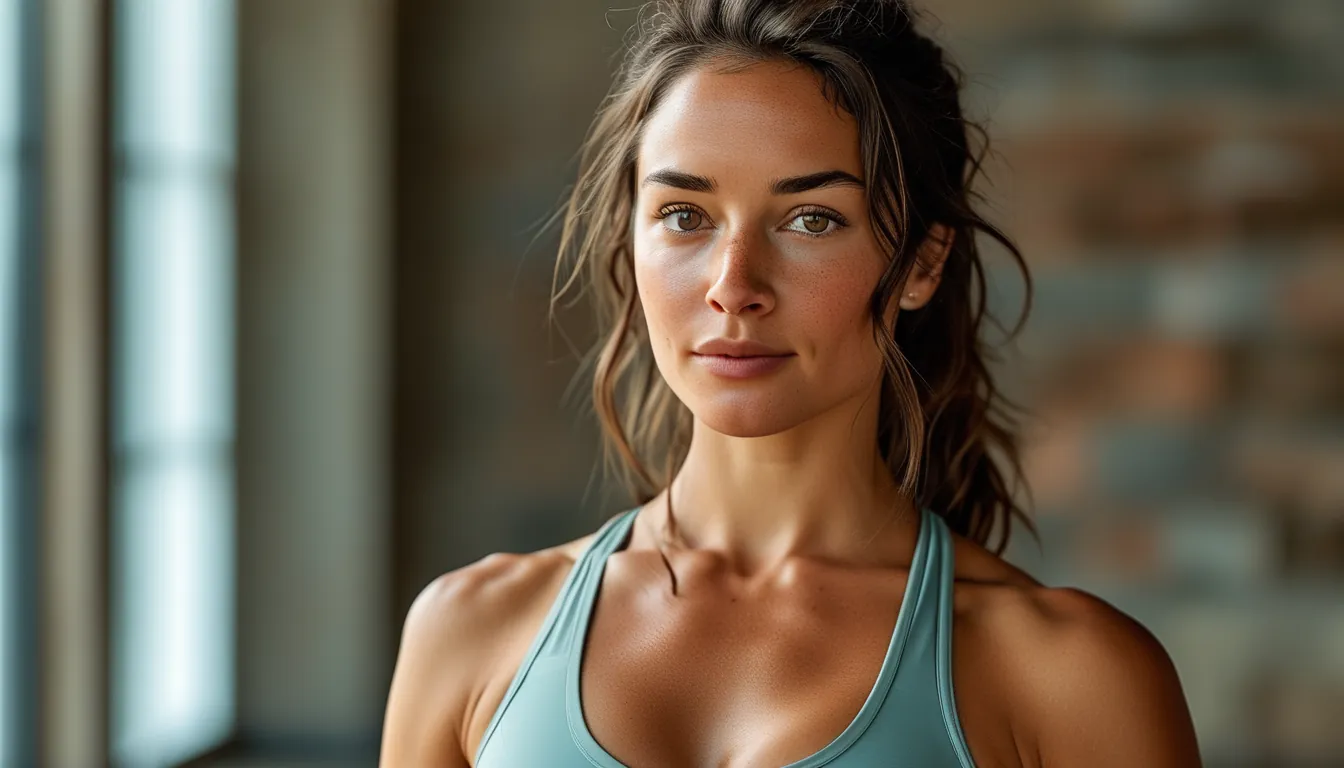
Seen here: Super High Waist Embossed Yoga Leggings with Inner Pocket — shop it on bubblelime.com
Keep Reading
This article is for general informational and styling purposes only. Fit, sizing, and product availability may vary.