Petite Outerwear: The Jacket Guide for Frames That Standard Coats Swallow
Quick Answer: Buy petite outerwear shoulder-first — if the shoulder seam sits past the edge of your shoulder, nothing else can save the coat. Cropped jackets are the easiest win; above-the-knee is the longest reliably safe length. Sleeve shortening is cheap and transformative, and a monochrome outfit underneath rescues almost any coat length.
Your coat is the largest single garment you own, which makes it the place where proportions either work brilliantly or fall apart entirely.
And it’s usually the second one. Standard outerwear is cut for a 5’8” frame, so on a petite body the shoulders slide, the sleeves swallow your hands, and the hem lands somewhere that removes about four inches of visible leg.
The encouraging part: every one of those failures is diagnosable in the fitting room, and most are fixable for the price of a takeaway.
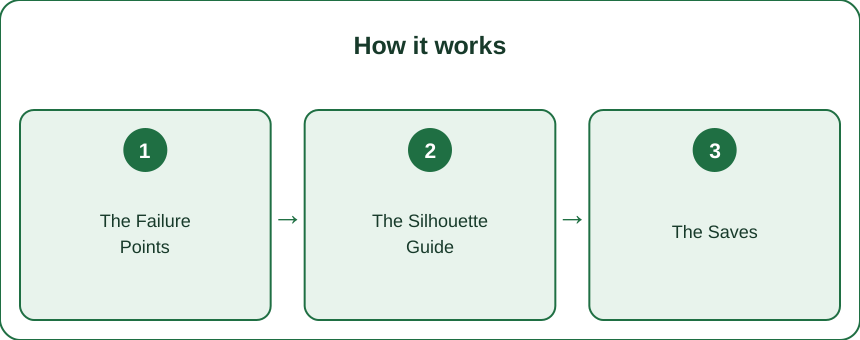
Where Do Standard Coats Go Wrong on Petite Frames?
The shoulder seam slides. This is the one that matters most. If the seam sits past the edge of your shoulder, the entire silhouette collapses — the armhole drops, the sleeve hangs wrong, and the coat reads as borrowed. Check this first, before anything else, because shoulder alterations are expensive and often not worth doing.
The sleeves bury your hands. Extremely common and extremely fixable. The target is the cuff ending at your wrist bone.
The length engulfs. A jacket designed to hit mid-thigh lands at the knee. A knee-length coat hits mid-calf. Every extra inch steals visible leg, and the leg line is where perceived height lives.
The details are overscale. Lapels, pocket flaps, and buttons are all sized for a larger canvas. Oversized details on a petite frame wear you rather than the reverse — look for narrower lapels and smaller hardware.
The volume drowns. Oversized coats are a real option, but they need deliberate handling. The line between “intentionally oversized” and “wearing someone else’s coat” is thin, and it’s held by everything else in the outfit being slim.
Which Coat Silhouettes Work Best?
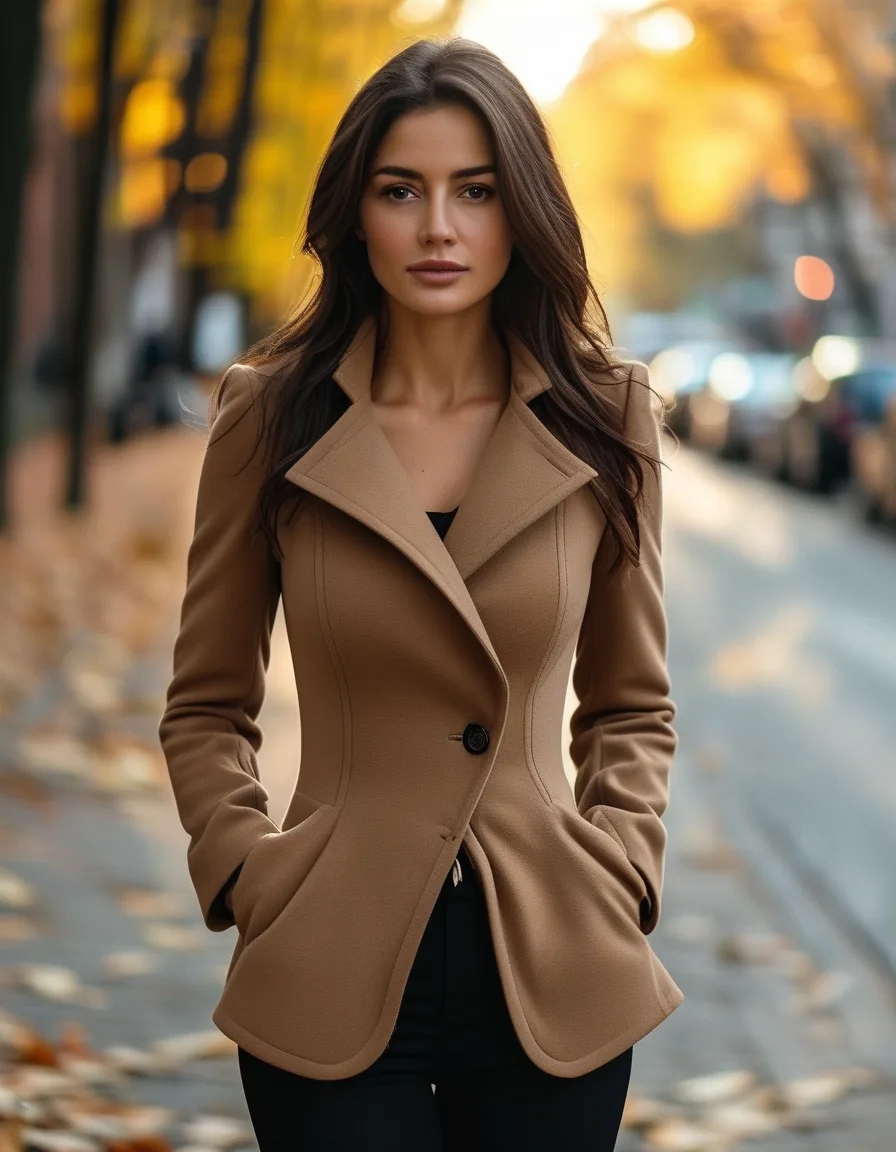
Cropped jackets — the petite superpower. Waist-length bombers, moto jackets, and cropped puffers are the easiest wins available. A hem that ends at or above the waist hands your legs their full visible length. If you buy one new jacket, buy a cropped one.
Tailored blazers. Fit the shoulder first; everything else follows. Single-breasted over double-breasted (less horizontal bulk), and a hem around the hip bone. Petite-line blazers have usually solved the sleeve and shoulder math already.
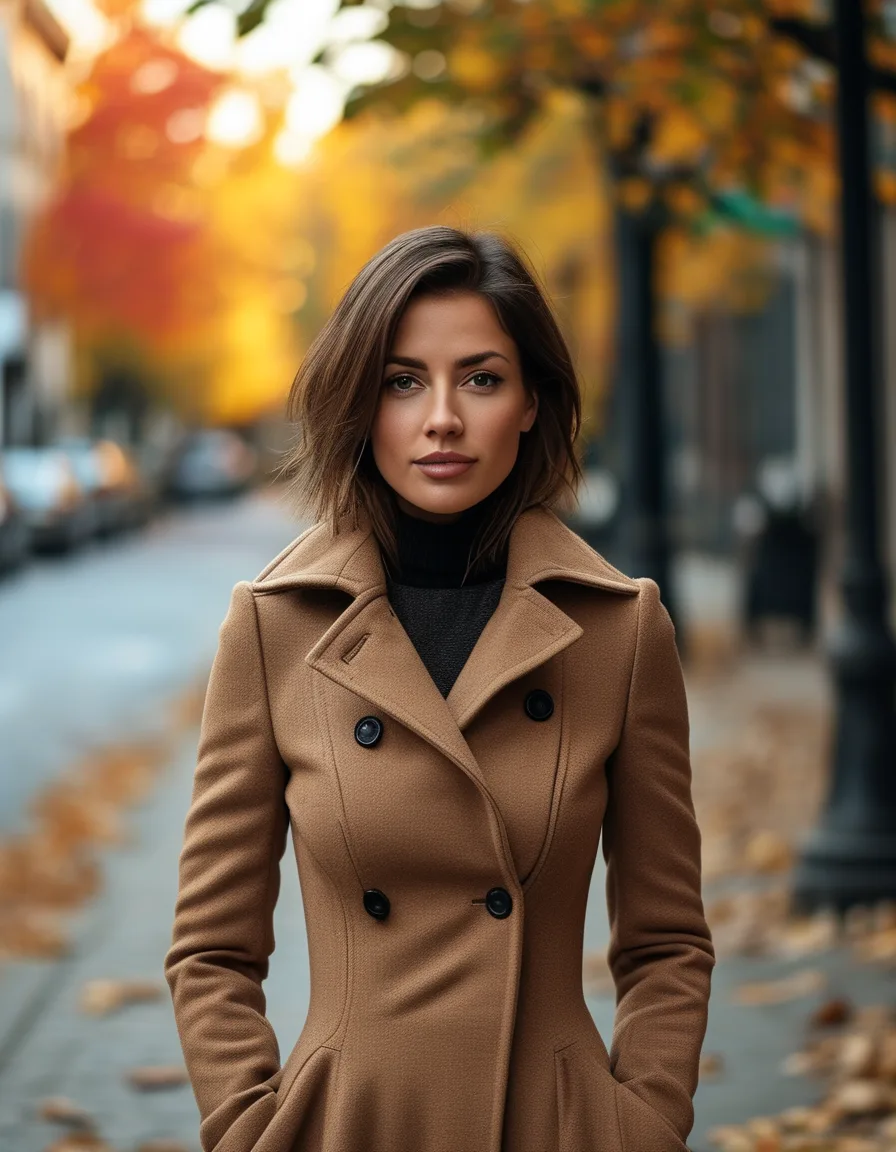
Mid-length coats — above the knee is the safe default. This is the longest length that works reliably without styling help. Knee-length is doable with a heel and a monochrome outfit underneath. A belt rescues most straight-cut coats by putting a waist where the pattern didn’t.
Long coats — the deliberate exception. A full-length duster works when it’s slim and when nothing else competes: monochrome underneath, no volume anywhere, ideally a heel. Done properly it’s the most dramatic thing in a petite wardrobe.
Puffers — watch the quilt scale. Narrow quilt channels read far better than large puffy sections, which add visual width in horizontal bands. Cropped and belted puffers are the reliable versions.
Trenches. Look for a petite cut or an above-knee length. Cinch the belt at your natural waist rather than the coat’s loop position, and get the sleeves shortened. It rewards the effort more than most coats.
What Nobody Tells You About Petite Outerwear
Shoulders can’t be cheaply fixed; almost everything else can. Shortening sleeves is a routine, inexpensive alteration. Shortening a hem is straightforward on a simple coat and costly on one with detailed hems or a lining feature. Reworking a shoulder is major surgery. So: buy for the shoulders, tailor the rest.
Thrifting plus tailoring beats fast fashion twice over. A well-made wool coat secondhand, plus an alteration, often costs less than a new synthetic one and lasts five times as long. Buy for the fabric and the shoulder fit; ignore the size on the label.
A monochrome outfit underneath rescues any coat length. When the coat opens, an unbroken column of one color keeps the vertical line intact. This single trick makes longer coats viable.
Cuffing sleeves deliberately looks intentional; sleeves that are just too long don’t. If you’re not tailoring, cuff them properly and evenly rather than letting them ride.
Your coat has the best cost-per-wear in your wardrobe. You’ll wear it a hundred-plus times a year. That makes it the garment where fit should beat trend every single time — express the trend in a scarf.
What Should a Petite Coat Capsule Look Like?
Three coats cover almost everything:
- A cropped everyday jacket — bomber, moto, or short puffer. The workhorse.
- An above-knee smart coat — wool or wool-blend, belted or with a defined waist. Works over tailoring and dresses.
- A weather-specific technical piece — waterproof or seriously warm, whichever your climate demands.
Add seasonally from there.
Buy timing: shop early season for selection, and end-of-season sales for next year’s additions.
Care: de-pill wool, store on broad hangers, and get things cleaned at the end of the season rather than the start. A coat that gets worn this much needs maintenance to keep looking like an investment rather than an old favourite.
Mini FAQ
How much does it cost to shorten coat sleeves?
Typically a modest sum for a simple sleeve, more if there’s a functional cuff, buttons, or a complex lining. It’s one of the cheapest high-impact alterations available, and worth doing on every coat you keep.
Can petite women wear long coats?
Yes, when they’re slim rather than voluminous and worn with a monochrome outfit underneath. The failure mode is a long and wide coat — length alone isn’t the problem, length plus volume is.
Are petite ranges actually different, or just smaller?
Genuinely different. True petite patterns raise the shoulder seam, shorten the sleeve and body, move the waist up, and often scale down lapels and pockets. It’s a re-drafted pattern, not a smaller size — which is why shopping petite lines first saves so much tailoring.
TL;DR:
- Check the shoulder seam first — it’s the one thing tailoring can’t cheaply fix.
- Cropped jackets are the easiest petite win; above-the-knee is the longest reliably safe length.
- Sleeves should end at the wrist bone; shortening them is cheap and transformative.
- Prefer narrow lapels, smaller hardware, and narrow quilt channels on puffers.
- Monochrome underneath rescues longer coats, and a belt rescues shapeless straight cuts.
- Build a three-coat capsule and let fit beat trend — this is your highest cost-per-wear garment.
See It in Motion
Seen here: High Waist Bootcut Yoga Pants with Pockets — shop it on bubblelime.com
Keep Reading
This article is for general informational and styling purposes only. Fit, sizing, and product availability may vary.